
According to Downing Street sources it was "no biggie".

'That journey across India has changed me forever.'

United States Energy Secretary Ernest Moniz has cancelled his crucial trip to India this month in view of the strained relations between the two countries over the arrest of an Indian diplomat on alleged visa fraud charges.

National Security Council Coordinator for Strategic Communications (NSCCSC) John Kirby on Tuesday told a press conference in Washington, DC: "India will be a critical strategic partner for the United States in the coming decades."

Although Trump had announced his decision to withdraw from the historic Paris Agreement on climate change on June 1, 2017, the process began on Monday with the formal notification and the US will be out of the pact on November 4, 2020.
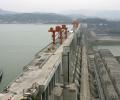
China defends its construction of a dam on the Brahmaputra river in Tibet, addressing concerns from India and Bangladesh about its potential impact on water flow and the environment.

2015 is going to witness new agreements on climate change.

The year 2024 was the hottest year on record, with the global average temperature exceeding 1.5 degrees Celsius above pre-industrial levels for the first time, according to the European climate agency Copernicus. Every month from January to June was the warmest ever recorded, and from July to December (except August), each month was the second warmest on record. Scientists are warning that the world is entering a new climate reality, with extreme heatwaves, floods, and storms becoming more frequent and severe. The report also highlights the failure of developed nations to meet their climate finance commitments to developing countries, despite the urgency of the situation.

Earth Day 2010 can be a turning point to advance climate policy, energy efficiency, renewable energy and green jobs. Earth Day Network is galvanising millions who make personal commitments to sustainability.

Reliance Industries (RIL), India's largest conglomerate, is set to pivot into a deeptech and advanced manufacturing enterprise, chairman and managing director (CMD) Mukesh Ambani said. "In artificial intelligence, our purpose is clear: to address complex societal challenges and create wealth for the nation and its people.
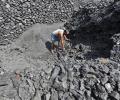

Climate activist Soman Wangchuk announced on Sunday that he will launch a 28-day fast on Independence Day if the government does not invite Ladakh authorities for talks on demands for statehood and constitutional protection for the union territory.

India, President of the G20, will host global leaders for the Summit scheduled to take place on September 9 and 10 in New Delhi.

Obama said US is leading the efforts to combat carbon pollution
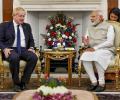
Ahead of the talks, the United Kingdom said it will offer India the best of British know-how on building battle-winning aircraft.
Supporting India's quest for nuclear power, United Nations climate panel's chief scientist R K Pachauri has said that country should pursue it to contain emission and meet energy needs.

'If we want a better life, we have to treat nature better, and behave properly.' 'That's nature's message to us.'

China has reiterated its plan to build the world's largest dam over the Brahmaputra River in Tibet, near the Indian border. The Chinese Foreign Ministry has assured that the project, estimated to cost around USD 137 billion, will not have any negative impact on downstream countries, India and Bangladesh. The ministry has stated that the project has undergone rigorous scientific verification and will be conducive to disaster prevention and mitigation, as well as climate change response. India has expressed concerns about the dam, raising the issue during talks with the visiting US National Security Advisor, Jake Sullivan. China has maintained that the project will not negatively affect the lower reaches and has committed to maintaining communication with downstream countries.

During his three-day UK visit until Tuesday, Modi is listed to address the COP26 summit with a national statement about India's climate action plan in the afternoon session on Monday, ahead of Australian Prime Minister Scott Morrison and Pakistan Prime Minister Imran Khan.

The air quality will be monitored in 10 cities.

India and China seemed to be on the same side at the Copenhagen Climate Summit, while the United States had to gatecrash to join hands.

"This is a momentous occasion," the secretary-general said after the deal was ratified by 72 countries accounting for more than 56 per cent of global greenhouse gas emissions.

India has an unprecedented opportunity to develop solar industry because like China, it offers scale which is critical to reducing costs and to stimulate innovation, says Shyam Saran.

India is likely to become a $40 trillion economy by 2047 -- a 13-fold jump from its current size -- driven primarily by a clean energy revolution and digitalisation, billionaire Mukesh Ambani said on Tuesday. Ambani's estimate for the Indian economy, currently the fifth largest in the world behind only the US, China, Japan and Germany, is more optimistic than Asia's richest man Gautam Adani, who last week stated that India will become a $30 trillion economy by 2050 on back of rising consumption and socio-economic reforms. "From a 3 trillion-dollar economy, India will grow to become a 40 trillion-dollar economy by 2047, ranking among the top three economies of the world," Ambani said at the 10th convocation of Pandit Deendayal Energy University in Gandhinagar.

Forest land in the state could be used for plantation of biofuel crops like Jatropha, chief minister Sheila Dikshit said.
China has defended its plan to build the world's largest dam on the Brahmaputra River in Tibet, assuring that the project will not affect riparian states and safety issues have been addressed through decades of studies. The dam, estimated to cost USD 137 billion, has raised concerns in India and Bangladesh, but Chinese authorities maintain that the project has been thoroughly studied and safeguards are in place. The dam is part of China's efforts to develop clean energy and respond to climate change.

A landmark climate change deal was clinched on Saturday with the approval of India, China and the US, after days of tough negotiations in Paris.
India will firmly oppose moves by developed countries to impose non-tariff barriers under the garb of promoting clean energy and arresting climate change at the G8 summit in Gleneagles (Scotland).
Hillary Clinton is scheduled to travel to India on Thursday -- her first visit as secretary of state -- which she has been saying would be the starting point of a new Indo-US relationship.

India is an 'extraordinarily important' economy and an 'important partner' of Canada in a range of sectors including fighting climate change and creating economic growth, Canadian Prime Minister Justin Trudeau said on Sunday.

Year by year, our cities remain defeated in the face of weather conditions, costing us time, money, resources and often lives, observe Amit Kapoor and Bibek Debroy.

John Holdren, Director, White House Office of Science and Technology Policy, said the two countries were working in the fields of space, medical sciences, climate change, clean energy and agriculture.
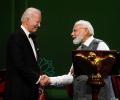
United States President Joe Biden will travel to India from September 7 to 10 to attend the G-20 Leaders' Summit during which he will discuss with other leaders a range of global challenges, including the Ukraine conflict, the White House announced on Tuesday.

Prime Minister Narendra Modi on Monday gave a clarion call for a "global people's movement" to bring about a behavioral change to deal with climate change as he made a path-breaking pledge to more than double India's non-fossil fuel target to 400 gigawatts.

Reliance Industries will by 2030 create or enable capacity to generate at least 100 gigawatts of electricity from renewable sources, which can be converted into carbon-free green hydrogen, its chairman Mukesh Ambani said Friday as he outlined a 1-1-1 vision to bring down the cost of hydrogen to under $1 per 1 kg in 1 decade. The focus on generating electricity from renewable sources of energy such as solar and wind -will help cut carbon emissions in the world's third-largest greenhouse gas emitter. The same electricity, when converted into green hydrogen, can replace petrol and diesel in automobiles and other fuels in the industry, helping cut down on the use of fossil fuels, carbon emissions and reduce import dependence.

Prime Minister Narendra Modi held talks with US President Joe Biden at the White House on Thursday to discuss a wide range of issues of mutual and global interests, aimed at further boosting the Indo-US strategic relations in areas like defence, space, clean energy and critical technologies.

At the summit, the US is able to play the role of a bully.

Delhi's crime rate against women stood at 144.4 in 2022 -- the highest among all states and Union Territories.

Modi's unexpected announcement of achieving net zero by 2070 may have neatly deflected the pressures on India to sign up to an ambitious pledge but it does nothing to dispel the ecological emergency that threatens all life on the planet, , points out former forerign secretary Shyam Saran, the prime minister's special envoy and chief negotiator on climate change 2007-2010.
China has approved the construction of the world's largest dam on the Brahmaputra River in Tibet, close to the Indian border. The USD 137 billion project, which is expected to dwarf even China's own Three Gorges Dam, has raised concerns in India and Bangladesh, the downstream riparian states. Concerns in India are centered around China's potential to control water flow, potentially enabling the release of large amounts of water to flood border areas in times of hostilities. The dam is part of China's 14th Five-Year Plan, and the Chinese government claims that the project is safe and prioritizes ecological protection.
